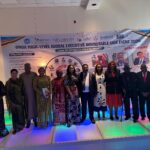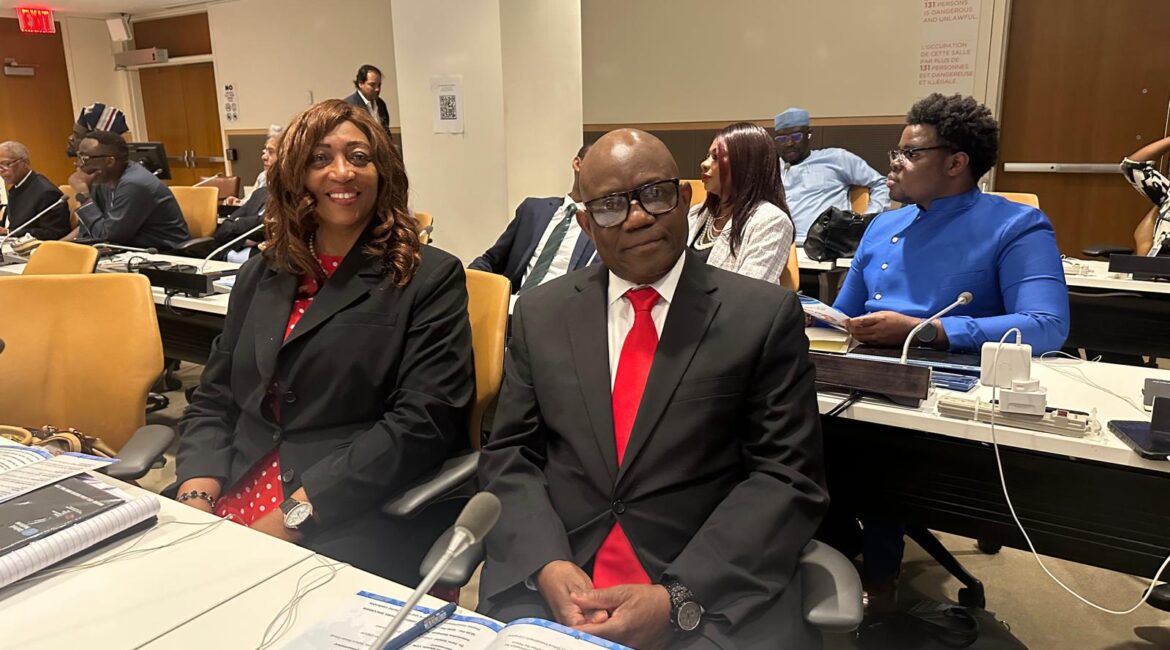
NEW YORK, USA — Addressing global leaders, diplomats, and private sector executives at the United Nations Headquarters, Dr. Lee O. Kareem, Chief Executive Officer of the Nigeria-USA Chamber of Commerce (NUSACC), delivered a compelling address emphasizing that true global conflict prevention requires moving upstream through institutionalized, interest-based negotiation and cross-sector collaboration.
Speaking during Technical Session III of the UNGA 81 High-Level Global Executive Roundtable Side Event 2026—convened by Merited Negotiation Consulting—Dr. Kareem highlighted the indispensable synergy between government, development bodies, and private enterprise in driving sustainable global progress.
Moving Upstream: Reimagining Conflict Prevention
Addressing an audience of federal and state officials, senior diplomats, and international organization leaders, Dr. Kareem noted that global challenges in 2026—spanning economic uncertainty, geopolitical friction, and shifting developmental landscapes—cannot be solved in isolation.
“For too long, global conflict prevention has been viewed primarily through a reactive, crisis-management lens,” Dr. Kareem stated. “But true leadership requires us to move upstream. It requires us to institutionalize proactive, interest-based negotiation protocols before friction hardens into conflict.”
He outlined the distinct yet complementary roles within modern economies:
-
Governments: Provide essential regulatory baselines, security frameworks, and diplomatic guardrails.
-
Development Catalysts: Bridge critical capacity gaps, deploy strategic capital, and ensure community-level infrastructure resilience.
-
Private Sector: Breathes life into these frameworks through innovation, job creation, and robust cross-border trade corridors.
Strengthening U.S.-Nigeria Trade Synergies
Highlighting vital bilateral relationships, Dr. Kareem pointed to the economic and agricultural trade corridors connecting the United States and Nigeria as tangible proof of public-private synergy. He underscored that strong trade does much more than move goods—it builds trust, aligns mutual interests, and creates a powerful, shared stake in peace.
A Clear Mandate for 2030 and Beyond
Looking toward the 2030 Agenda and future global frameworks, Dr. Kareem issued a three-point mandate for leaders across sectors:
-
Institutionalize Executive Negotiation Training: Embed principled diplomacy tools across public and private institutions to equip modern leaders.
-
Expand Transparent Investment Frameworks: Safeguard both foreign direct investment (FDI) and local enterprise growth, empowering emerging economies like Nigeria to actively shape global standards.
-
Strengthen Multilateral Cooperation: Enhance cooperative ties between U.S. and Nigerian delegations within multilateral bodies to pilot innovative, preemptive conflict-resolution toolkits.
“Stronger negotiations build stronger nations. Stronger multilateralism secures our shared global future,” Dr. Kareem concluded, urging participants to turn shared concerns into collaborative, proactive leadership.
Event Overview
-
Event: UNGA 81 High-Level Global Executive Roundtable Side Event 2026
-
Date: Friday, September 18, 2026
-
Venue: United Nations Headquarters, New York, USA
-
Theme: Government, Development and Private Sector Leadership: Strengthening Negotiation, Global Conflict Prevention and Multilateralism
-
Convened By: Merited Negotiation Consulting
Official Speech Transcript
Morning Session: Technical Presentation | Interactive Dialog: 12:20 PM – 12:50 PM (10 minutes)
UNGA 81 High-Level Global Executive Roundtable Side Event 2026
Date: Friday, September 18, 2026
Venue: United Nations Headquarters, New York
Sponsor: Merited Negotiation Consulting
Theme: Government, Development and Private Sector Leadership: Strengthening Negotiation, Global Conflict Prevention and Multilateralism
Speaker: Lee O. Kareem, CEO, Nigeria USA Chamber of Commerce (NUSACC)
Opening Address & Speech
Your Excellencies, distinguished federal and state officials from Nigeria, esteemed ambassadors and senior diplomats, leaders of the United Nations, and visionary executives from the private sector:
Good morning, and welcome.
I want to extend my deepest appreciation to Merited Negotiation Consulting for convening this vital gathering today at United Nations Headquarters. As we gather for the UNGA 81 High-Level Global Executive Roundtable, we do so against a backdrop of profound global complexity. In 2026, the headwinds we face—economic uncertainty, geopolitical friction, and shifting developmental landscapes—cannot be solved by any single sector working in isolation.
Our theme today, Government, Development, and Private Sector Leadership: Strengthening Negotiation, Global Conflict Prevention, and Multilateralism, strikes at the very heart of what sustainable progress demands.
For too long, global conflict prevention has been viewed primarily through a reactive, crisis-management lens. But true leadership requires us to move upstream. It requires us to institutionalize proactive, interest-based negotiation protocols before friction hardens into conflict. And this is where the tripartite alliance of government, development, and private enterprise becomes indispensable.
Look at the architecture of our modern economies. Governments provide the essential regulatory baselines, security frameworks, and diplomatic guardrails. Developmental catalysts bridge critical capacity gaps, deploy strategic capital, and ensure that community-level infrastructure remains resilient. But it is the private sector—through innovation, job creation, and robust cross-border trade corridors—that breathes life into these frameworks.
When we examine vital bilateral relationships, such as the economic and agricultural trade corridors connecting the United States and Nigeria, we see the tangible proof of this synergy. Strong trade doesn’t just move goods; it builds trust, aligns mutual interests, and creates a powerful stake in peace.
As we look toward 2030 and beyond, our mandate as leaders is clear:
First, we must institutionalize executive negotiation training across our public and private institutions, ensuring our leaders are equipped with the tools of principled diplomacy.
Second, we must expand transparent investment frameworks that safeguard both foreign direct investment and local enterprise growth, particularly empowering emerging economies like Nigeria to take their rightful, active role in shaping global standards.
And third, we must strengthen cooperative ties between US and Nigerian delegations within multilateral bodies to pilot innovative, preemptive conflict-resolution toolkits.
Excellencies, ladies and gentlemen, stronger negotiations build stronger nations. Stronger multilateralism secures our shared global future. Let us leave this room today not just with shared concerns, but with a renewed commitment to collaborative, proactive leadership.
Thank you for your time, your leadership, and your dedication to a more secure and prosperous world. I look forward to our roundtable dialogue.
About NUSACC
The Nigeria-USA Chamber of Commerce (NUSACC) is a bilateral business advocacy organization dedicated to facilitating trade, driving strategic cross-border investments, and expanding commercial linkages between enterprises in Nigeria and North America.
For media inquiries, strategic partnership opportunities, or further information, please visit our official help portal or contact the NUSACC Secretariat.